
How Bloodborne Pathogens Spread: Transmission, Entry Points, and Common Exposure Risks: Denver Guide
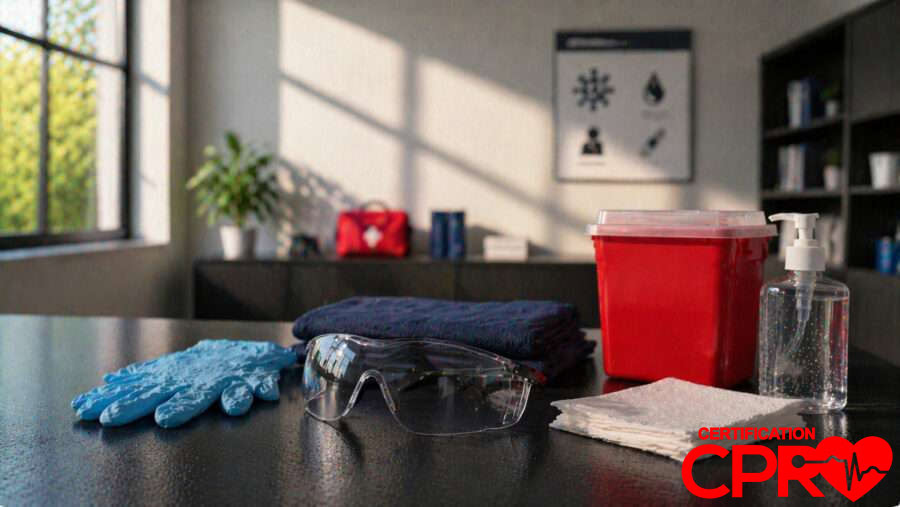
Bloodborne pathogens spread through exposure to infected blood and certain other potentially infectious materials, but that sentence stays vague until you unpack what exposure means. A lot of the confusion comes from treating any dirty-looking scene, casual contact, or shared space like a transmission event. Workplace risk is not usually defined that way.
In practical terms, the question is narrower. Did blood or another covered material have a path into the body through a puncture, broken skin, or a splash to the eyes, nose, or mouth? That frame helps workers think plainly about the problem. It keeps people from being careless about genuine exposure while also keeping them from panicking over ordinary contact that does not create the same risk.
If you are reading this because your workplace is reviewing response expectations, start with CPR Certification to see the main class paths. This page stays focused on the transmission side of the topic.
In Denver, bloodborne pathogens training can matter in a dental office near Cherry Creek, a body-art studio in RiNo, a school health room in Denver Public Schools, a custodial shift downtown, or a clinic connected to Denver Health or UCHealth. The first safe move is practical: avoid direct contact, use the right barrier, contain only what you are trained to handle, and report the incident through the workplace process.
Upcoming CPR Class Dates and Times
How Bloodborne Pathogen Transmission Happens
Transmission happens when infected blood or another covered material reaches the bloodstream or a vulnerable body surface in a way that can create exposure. Being in the same room with an injured person, helping from a distance, or touching intact skin is not the same as an exposure event.
The main transmission routes people are trained around are:
- punctures from contaminated needles or sharps
- blood contacting broken or damaged skin
- blood splashing into the eyes, nose, or mouth
- direct contact with contaminated instruments or materials during a task
Training spends so much time on work habits, PPE, and cleanup procedure for exactly that reason. Transmission is usually tied to a contact event, not simple proximity.
The Main Entry Points Into the Body
Workers hear a lot about entry points because entry points are what turn a messy scene into a true exposure concern. The distinction matters because workers often overestimate some low-risk contact while underestimating the higher-risk contact that needs to be reported immediately. Intact skin is not a puncture, a fresh cut, or a splash to the eye. Those are fundamentally different situations that call for different responses.
The practical question when assessing a scene is whether the blood had a route into the body. A needle that breaks through skin gives it one. Contaminated material splashing into the eye gives it one. Contact with unbroken skin generally does not. But contact with damaged or cut skin can. Entry point awareness is what makes workers accurate rather than either dismissive or panicked.
Which Fluids and Materials Matter Most
Blood is the main focus in bloodborne pathogens training because it is the material most often tied to workplace exposure planning. Depending on the setting, training may also address other potentially infectious materials identified by the employer or the work environment.
Workers do not need to make those calls from memory in the middle of a stressful incident. They need to know that if the workplace has identified certain fluids or materials as exposure risks, those materials should be handled with the same care as blood. Written exposure-control plans matter for that reason. They keep people from improvising when the pressure is on.
Common Workplace Exposure Scenarios
Transmission risk makes more sense when you picture the kinds of incidents that happen on the job. Most exposures are fast, ordinary workplace moments where somebody is rushed, distracted, or handling the wrong thing without protection.
Common examples include:
- a nurse or medical assistant gets stuck by a used needle
- a dental worker is cut by a contaminated instrument
- blood splashes into the eye during emergency care
- a first-aid responder helps an injured coworker without proper barrier protection
- a housekeeper or janitorial worker cleans a blood spill without the right gloves or cleanup steps
- a worker handles a contaminated sharp that was left in the wrong place
In each case, the blood has a route to expose the worker. Presence alone is different from contact through a puncture, broken skin, or mucous membrane.
What Does Not Usually Transmit Bloodborne Pathogens
Some readers need this part spelled out because fear fills the gaps fast. Bloodborne pathogens are not usually spread by ordinary proximity, casual conversation, or sharing space in a room with someone who is injured. The topic is specifically about infected blood or certain infectious materials reaching a meaningful entry point.
That does not mean cleanup can be sloppy. It means workers need a realistic understanding of risk, not an alarmist one. Good training helps them tell the difference between a scene that needs careful precautions and a scene that has already become a reportable exposure incident.
Why Sharps and Needlestick Injuries Matter So Much
Needlesticks and other sharps injuries get so much attention because they create a direct route into the body. In healthcare, dental, lab, and certain cleanup settings, that makes them one of the clearest bloodborne exposure events a worker can face.
Workers are taught not to take shortcuts with sharps because a rushed or casual moment is often where the danger lives. A device left in the wrong place, a hurried cleanup, or an unsafe hand movement can turn a routine task into an exposure incident in seconds.
If that happens, the workplace exposure protocol should start right away so the response is handled without delay.
Why PPE and Cleanup Procedures Matter
PPE and cleanup procedure matter because they interrupt the transmission path before exposure happens. Gloves, eye protection, masks, gowns, and other barriers do not remove all risk, but they lower the odds that blood reaches broken skin, mucous membranes, or other vulnerable entry points.
Cleanup matters for the same reason. A blood spill creates a contamination-control problem, not a casual housekeeping task. Workers need the right barrier protection, the right disinfection steps, and the right disposal steps instead of wiping things down casually and hoping for the best.
If the question is what workers should be using, the answer depends on the task, the exposure risk, and the employer’s PPE standards.
What to Do After a Possible Exposure
If a possible exposure happens, the worst move is to wait around and see whether it counted. If blood reached a puncture, broken skin, the eyes, nose, or mouth, the incident needs to go through workplace reporting and medical evaluation right away.
The first steps depend on the type of exposure, but the usual pattern is:
- clean or flush the exposed area right away
- report the incident immediately
- follow the employer’s exposure protocol
- get medical evaluation without delay
Good training pays off here. Workers should not be inventing the response after the exposure happens. They should already know the reporting path and the first action steps.
Why This Matters in Denver Workplaces
Upcoming CPR Class Dates and Times
Denver has plenty of jobs where blood exposure risk is not daily, but the response still has to be serious. A tattoo shop in RiNo may handle contaminated sharps. A school health aide in Denver County may respond to a playground injury before anyone else. A hotel housekeeping team near downtown event venues may be first to a contaminated guest room.
This topic reaches well beyond clinical settings. Workers do better when they understand how transmission happens instead of carrying around a vague fear that all contact is equally risky. For Denver teams that also need hands-on group CPR training, onsite CPR training is usually the simplest next step.